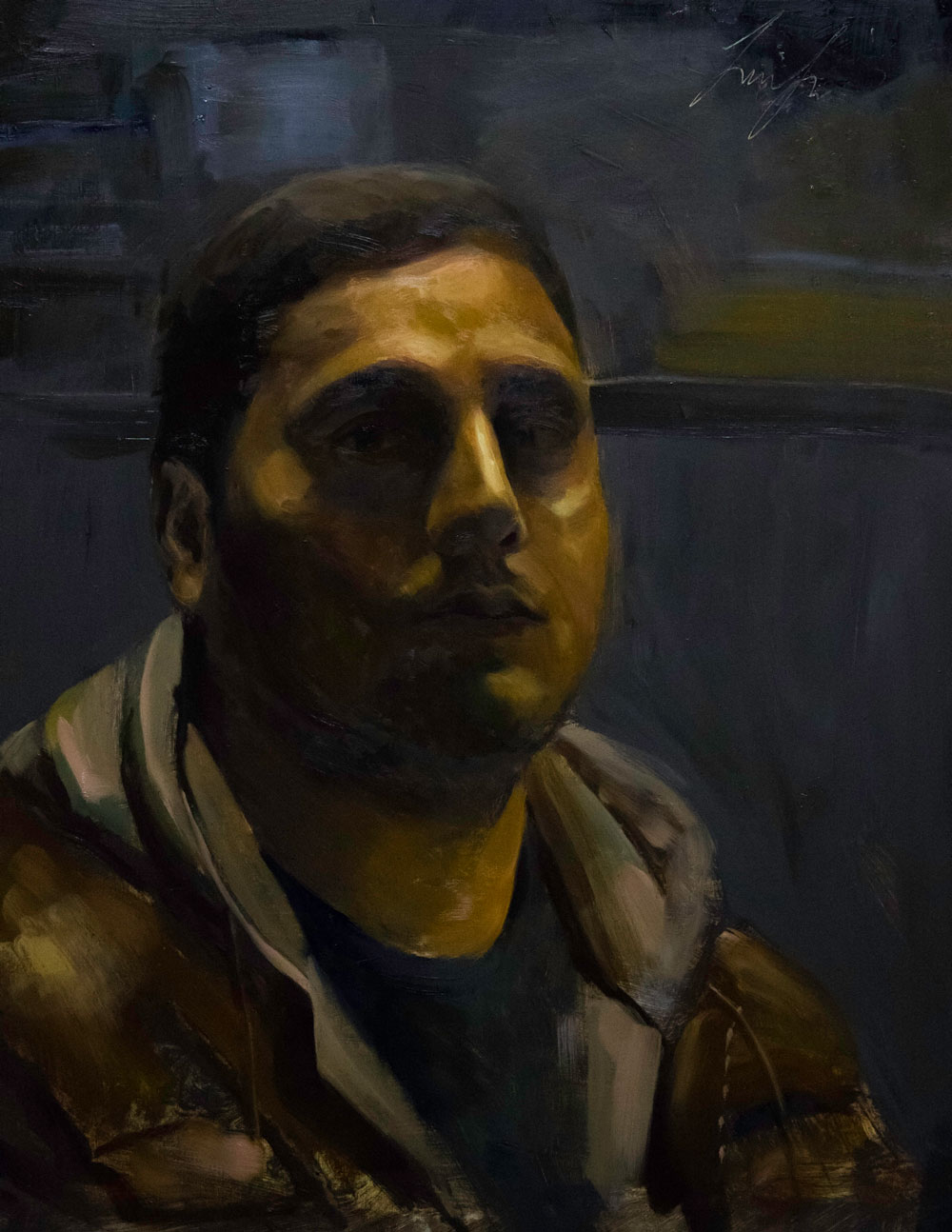
TL;DR — Quick Summary
Notes from a slow morning in the studio. On the discipline of looking, simplifying form, and the quiet conversation between light and shadow.
Every painting begins long before the first stroke. It begins in the looking—in the quiet discipline of noticing. The world offers endless detail, but the painter’s task is not to collect it all. It is to understand it, to distill it into its essential form and learn to express that truth with clarity.
This is not a matter of skill alone. It is a way of being present. The more we look, the more the world reveals itself.
“ The object is not the goal. The truth of the object is. “ — Jean-Baptiste-Siméon Chardin
Looking Before Doing
I start each session by simply looking. No brush in hand. I let my eyes travel, tracing the proportions, rhythms, the tilt of a shoulder, the curve of a jar. I’m not trying to capture form yet—I’m learning to see what is already there.
This quiet looking is not passive—it is an active conversation. The more we look, the more the subject reveals itself.
Seeing the Shapes
When I sketch, the world simplifies. Edges soften. Values group together. Complexity falls away and what’s left is structure, light and dark.
It is in these shapes—large, simple, and true—that I see form. When I start to chase fancy details, the painting tightens. But when I see the structure, I see freedom.
Light as Structure
Light is not just what illuminates—it’s what builds. It gives form its volume and weight. In chiaroscuro, light is the architect. The form rises or softens not by what we add, but by what we leave.
A Small Study
Here is a 20-minute study from life. Nothing heroic. Just a glass jar, a folded cloth, and two oranges. Yet it holds enough truth to teach you more than any lecture.